Mary Ann Tozer was born around 1812 near Bridgwater, Somerset. Her early years were marked by hardship and responsibility beyond her age. By the time she was just 15 or 16, she had given birth to a son, Frederick, in 1827. The circumstances of Frederick’s birth remain unknown—was he the result of a youthful romance, or had Mary Ann found herself in a far less fortunate situation? Whatever the case, she did not remain alone for long.
On 30 October 1829, Mary Ann married Thomas Worthington, a man six years her senior, in Clifton, Bristol. Thomas was a victualler, meaning he ran a public house, a demanding business that required a license from the Quarter or Petty Sessions. The sale of alcohol in Victorian Britain was a lucrative trade, but it came with its share of risks. Publicans had to vow to maintain order, as rowdy or criminal behaviour in a tavern could bring fines, the loss of a license, or worse.
By the time of the 1841 Census, Mary Ann and Thomas were living at Cornish Mount Passage, in the Castle Precincts of Bristol. Along with them were three other women: Charlotte Hill (15), Mary Powell (25), and Charlotte Sampson (25). Their occupations were recorded using a personalised code by the census enumerator. The specific nature of their employment is unclear, but given that the family was running an inn, they may have been servants or workers in the establishment.
Over the next few years, Thomas and Mary Ann moved between different taverns in Bristol, settling in areas known for trade and heavy drinking. Between 1839 and 1840, Thomas was landlord of the White Hart on Welsh Back, a central part of the docks bustling with workers from the Welsh slate industry. The work was demanding, but also potentially profitable if a publican could maintain a reputable house.
However, Thomas’s ability to keep order was soon called into question. On 6 June 1839, The Bristol Mercury reported:
“Thomas Worthington, a publican, was fined 20s and costs, for suffering disorderly characters to assemble in his house.” (The Bristol Mercury, 6 June 1839)
This was no minor infraction. A disorderly pub was considered a public nuisance, and repeated offences could mean ruin. Whether Thomas was struggling to control unruly patrons or simply turning a blind eye to the behaviour of his clientele is unclear, but either way, his business was under scrutiny.
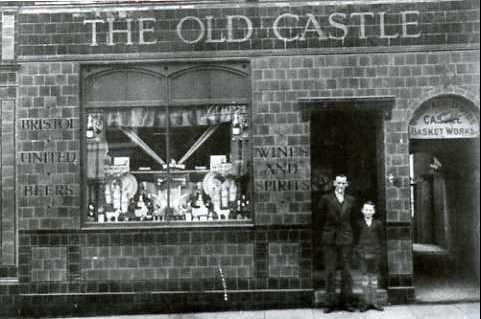
By 1842, Thomas had taken on a new establishment: The Old Castle on Castle Street. The location had historic significance, having once been the site of the old Bristol Castle before its demolition in 1656. The surrounding streets had since become a bustling centre of commerce, with The Old Castle serving as a popular tavern. It seemed like an opportunity for a fresh start.
But just a year later, tragedy struck.
On a fateful night in 1843, a devastating fire tore through The Old Castle. The flames spread rapidly, consuming the wooden structure in minutes. In the chaos, a small girl named Lydia Groves, niece to Thomas Worthington, desperately tried to extinguish the flames. Her screams filled the night, alerting the household and the street beyond.
As neighbours rushed to help, one horrifying truth became apparent: Thomas Worthington was still inside. The landlord, bedridden for months due to a severe disease affecting his brain and nervous system, was trapped in his room as the fire spread. Mary Ann, frantic with fear, attempted to rescue her husband, but the men who had arrived at the scene forcibly held her back.
Why did they stop her? Could Thomas have been saved? And who, if anyone, was to blame for the fire?
The answers lay in the harrowing reports that followed, revealing a story of panic, accusation, and a tragedy that would haunt Mary Ann for the rest of her life…
To be continued in Blog 2: Fire, Tragedy, and Scandal at The Old Castle.
If you’re interested in the history of The Old Castle pub in Bristol, check out this blog post: The Old Castle Public House. It offers fascinating insights into its past.
 Albert Milsted: A Man of Victorian Reinvention
Leave a comment