
The Scadden Family Line
Thomas Scadden (1540-1578) was born in Somerset and settled in Ludgvan, Cornwall, where his three sons were born. The next four generations of Scaddens in this line continued to live in the area and raise their families in the villages of Ludgvan and Varfell. Some of Thomas’ descendants moved to other areas of Penzance, such as Madron and Paul, while others relocated to Gwinear, near Camborne. In the village of Paul, near Penzance, there is a 16th century building named Scadden House, which is currently a holiday home: it is close to the church and was rebuilt after the original was burnt by a group of Spaniards who came ashore in 1595.
The Artistic Legacy of Richard Scadden
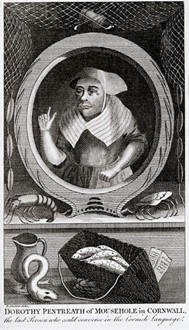
Richard Scadden (1719-1802) became one of the most celebrated members of the family. After apprenticing with London ceramist Thomas Frye, Richard returned to Cornwall and contributed to local artistic projects. His works include Royal Arms and paintings of local landmarks like St Michael’s Mount. Notably, his engraving of Dolly Pentreath, the last native Cornish speaker, remains preserved in the National Portrait Gallery.

A Family Shaped by Change
Tracing the Scadden family’s artistic and social contributions made me think about the value of creativity and perseverance in our own lives. I recall standing in awe before a painting of St Michael’s Mount, thinking how it connected me not just to history, but to a shared appreciation for beauty passed down through generations.
The Scadden family’s history reflects resilience and adaptability, with members contributing to various fields such as art, governance, and local development.
Genealogy can be a powerful way to uncover not just where you come from, but the roles your ancestors played in shaping the world around them.
 Albert Milsted: A Man of Victorian Reinvention
Leave a comment